
Jakarta, opinca.sch.id – When I think about how modern economies can become more sustainable without sacrificing innovation or long-term growth, Circular Economy stands out as one of the most practical and forward-looking concepts. Traditional economic systems often follow a linear pattern of taking resources, using them, and discarding them. Circular economy is not only an environmental idea. It is also a framework for designing smarter financial models that reduce waste, improve efficiency, and create more resilient business systems.
Why Circular Economy Matters
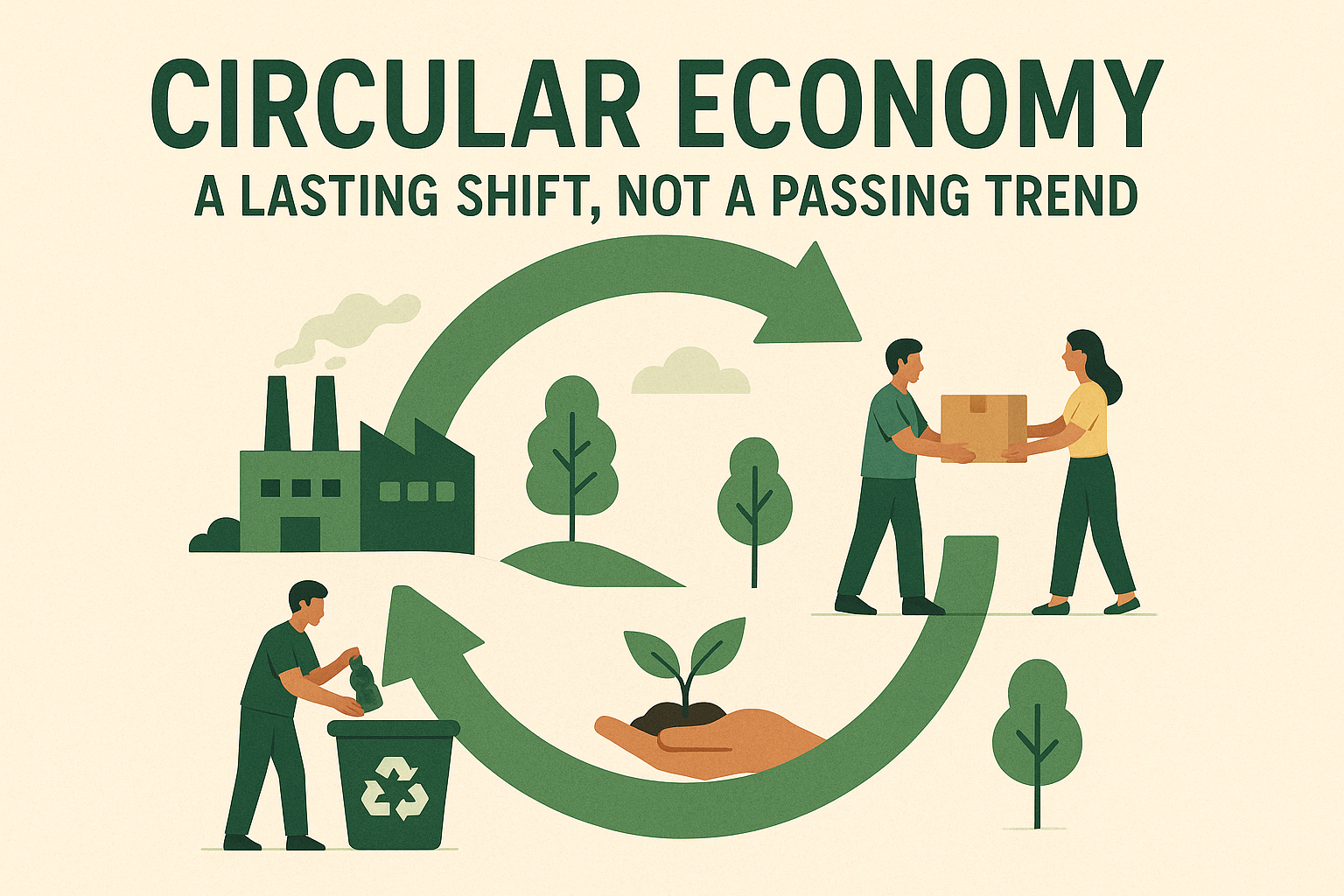
In my experience, Circular Economy matters because resource efficiency is no longer just a sustainability goal. It is becoming an economic necessity. Businesses face rising material costs, supply chain instability, waste management pressures, and growing expectations from consumers and regulators. A circular model offers a way to respond to those challenges by treating waste as lost value and designing systems that recover, reuse, repair, and regenerate resources.
This is especially important because financial performance and environmental responsibility are increasingly connected. Companies that use resources more efficiently can reduce costs, strengthen resilience, and open new revenue opportunities. That makes circular economy relevant not only to environmental policy, but also to finance, investment, and long-term business strategy.
There is also a strong connection to economic Knowledge here. Circular economy brings together sustainability, cost management, operational design, investment planning, and value creation in a very practical way.
My Perspective on Financial Models for Resource Efficiency
What changed my understanding of Circular Economy was realizing that its real power lies in redesigning value, not simply reducing waste. At first, circular practices may seem limited to recycling or environmentally friendly behavior. But over time, I came to see that the concept goes much further. It changes how organizations think about ownership, product life cycles, maintenance, customer relationships, and revenue generation.
That is what makes circular economy meaningful to me. It encourages businesses and institutions to see efficiency not as cutting corners, but as designing systems where materials, products, and capital are used more intelligently. In that sense, financial models become part of sustainability rather than separate from it.
Core Financial Models in Circular Economy
I think Circular Economy becomes easier to understand when its financial models are broken down clearly.
Product-as-a-service
Instead of selling a product once, companies provide access through leasing or subscription models.
Repair and maintenance revenue
Businesses can generate income by extending product life rather than replacing products quickly.
Resource recovery
Used materials can be collected, processed, and reintroduced into production systems.
Remanufacturing
Products or components can be restored and sold again, reducing raw material dependence.
Sharing platforms
Assets can be used more efficiently when access is shared across multiple users.
Performance-based models
Revenue can be linked to outcomes or efficiency rather than simple product volume.
Common Challenges in Circular Economy Finance
I have noticed that organizations often face recurring challenges when trying to apply Circular Economy principles financially.
High initial investment
Redesigning products and systems may require upfront capital.
Complex value measurement
Some circular benefits appear over time and are harder to measure immediately.
Infrastructure limitations
Collection, repair, and recovery systems may not already exist.
Consumer behavior
Customers may still prefer ownership or disposable convenience.
Accounting and policy gaps
Traditional financial systems do not always capture circular value clearly.
Practical Value of Circular Economy
I believe Circular Economy offers strong value when it is treated as both a sustainability strategy and a financial one.
It improves resource efficiency
Businesses can get more value from the same materials.
It reduces waste costs
Less discarded material means less lost economic value.
It creates new revenue streams
Repair, leasing, remanufacturing, and recovery can all generate income.
It strengthens resilience
Reduced dependence on virgin resources can improve supply stability.
It supports long-term competitiveness
Efficient, adaptive systems are often better prepared for future pressures.
Below is a simple overview of circular economy financial models:
| Circular Economy Model | Why It Matters | Example in Practice |
|---|---|---|
| Product-as-a-service | Extends customer relationships and encourages durability | Leasing office equipment instead of selling it outright |
| Repair and maintenance | Preserves product value longer | Offering paid repair plans for electronics |
| Resource recovery | Reduces raw material waste | Collecting used packaging for reprocessing |
| Remanufacturing | Restores value from returned products | Rebuilding industrial machinery components |
| Sharing platforms | Increases asset utilization | Shared mobility or shared equipment systems |
These models show that circular economy is not only about using fewer resources. It is about creating systems in which value continues to circulate instead of being lost after one use.
Why Circular Economy Matters Beyond Business
I think Circular Economy matters because it reflects a broader change in how we define progress. For a long time, economic growth was often associated with higher consumption and faster disposal. Circular thinking challenges that assumption by showing that efficiency, durability, and regeneration can also create value.
That broader significance is what makes the topic so compelling. Circular economy is not just a business strategy or an environmental framework. It is part of a larger shift toward more responsible and intelligent economic systems.
Final Thoughts
For me, Circular Economy is one of the most important ideas for the future of finance and sustainability because it connects resource efficiency with innovation, resilience, and long-term value creation. It encourages organizations to rethink how products are designed, how revenue is generated, and how waste can be transformed into opportunity.
That is why it matters so much. Circular economy is not simply about reducing environmental harm. It is about building financial models that make better use of the world’s resources
Explore our “Financial” category for more insightful content!
Don't forget to check out our previous article: International Funds: Expanding Your Financial Horizons Globally
