Jakarta, opinca.sch.id – A Cash Flow Statement is one of the most important financial reports because it shows how cash actually moves into and out of a business. While profit figures can suggest that a company is performing well, those figures do not always reveal whether the business has enough real cash to pay suppliers, meet payroll, cover debt, or continue operating smoothly. This is why cash movement often matters more than paper profit.
A company can report accounting profit and still face serious difficulty if cash is tied up, delayed, or leaving the business too quickly. The cash flow statement helps reveal that reality by focusing on actual inflows and outflows rather than accounting results alone.
Why a cash flow statement matters
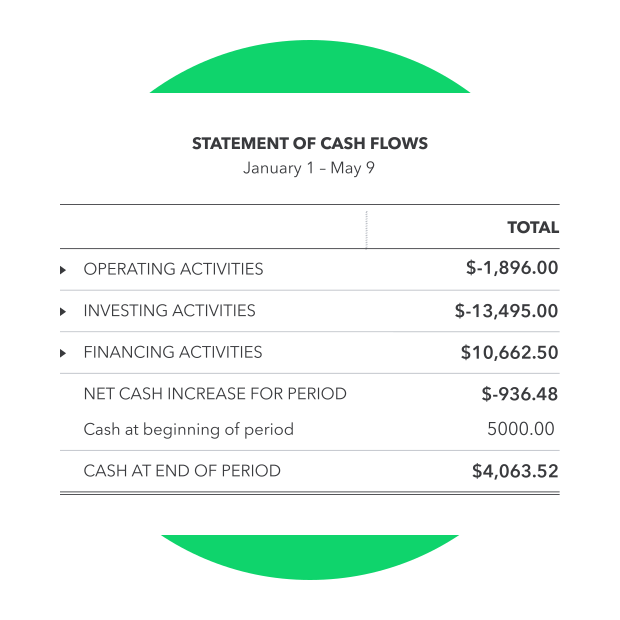
A Cash Flow Statement matters because cash is what keeps a business functioning day to day. Profit may look impressive in a report, but cash determines whether the company can meet real obligations on time.
This statement helps users:
- Understand cash availability
- Evaluate operating strength
- Monitor payment capacity
- Assess short-term financial flexibility
- Identify signs of financial pressure
That makes it a practical tool for managers, investors, and creditors alike.
What the cash flow statement shows
A standard Cash Flow Statement usually organizes cash movement into three major sections, each showing a different source or use of cash.
These sections are:
- Operating activities
- Investing activities
- Financing activities
Together, they show whether cash is being generated from core operations, used for asset decisions, or affected by borrowing and capital activity.
Why cash can matter more than profit
A central lesson of the Cash Flow Statement is that profit and cash are not the same thing. Profit is based on accounting rules, while cash flow reflects actual liquidity movement.
A business may show profit but still struggle if:
- Customers pay late
- Inventory absorbs too much cash
- Debt payments are high
- Capital spending is heavy
- Receivables grow faster than collections
This is why paper profit can sometimes look healthy while the bank account looks considerably less enthusiastic.
Using cash flow to assess business health
The Cash Flow Statement is useful because it helps users judge whether the business is generating enough cash from normal operations to support itself over time.
Strong operating cash flow often suggests:
- Better financial resilience
- More reliable internal funding
- Lower dependence on emergency borrowing
- Greater capacity to handle obligations
Weak cash flow, by contrast, may point to deeper operational or financial problems even when reported earnings appear acceptable.
Reading the statement in context
Like any report, the Cash Flow Statement is most useful when interpreted in context. A single period does not always tell the whole story.
Important context includes:
- Trend over multiple periods
- Business growth stage
- Industry characteristics
- Capital expenditure needs
- Relationship between profit and operating cash flow
Cash flow analysis becomes more meaningful when viewed as part of the larger financial picture.
Final thoughts
A Cash Flow Statement matters because it shows the real movement of cash, which often tells a more practical story than paper profit alone. By revealing how cash is generated, spent, and managed, the statement helps people assess whether a business is truly operating on stable financial ground.
Profit can look good on paper, but cash decides what a business can do in reality. That is why the cash flow statement deserves close attention.
Explore our “”Financial“” category for more insightful content